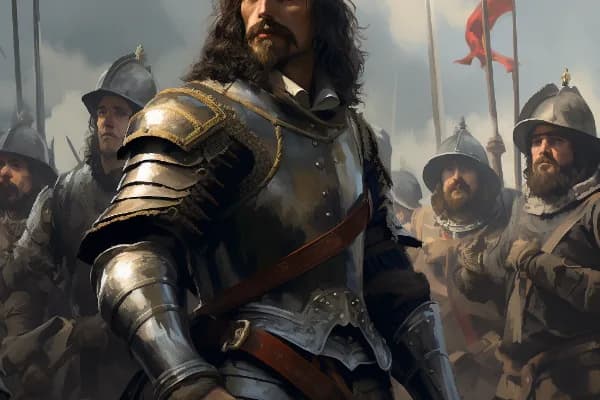
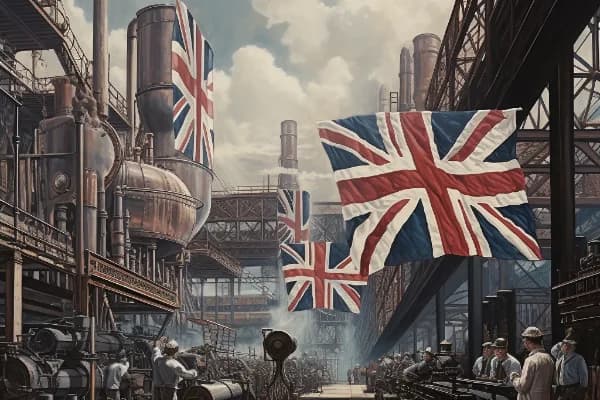
1. What was the biggest source of employment during the 18th century?
Answer: D — Manufacturing
30 questionswith answers
This part of the history syllabus covers the long period in which Britain built trade links, industry and influence far beyond its own islands. Questions tend to focus on industry, exploration, empire and the social change that came with them.
The topic "A Global Power" in the "A Long and Illustrious History" chapter discusses how the United Kingdom evolved into a major global power, particularly from the 16th century onwards. This period of British history is marked by the expansion of its empire, economic growth, and significant international influence.
Every question below is shown with the correct answer marked. The real test mixes topics together, so once this one feels comfortable try a full practice test.
Answer: D — Manufacturing
Answer: B — 1928
Answer: D — St Andrew
Answer: B — TRUE
This commercial expansion and prosperity was sustained in part by the booming slave trade. While slavery was illegal within Britain itself, by the 18th century it was a fully established overseas industry, dominated by Britain and the American colonies.
Answer: B — TRUE
Britain gained control over Canada, and the East India Company, originally set up to trade, gained control of large parts of India. Colonies began to be established in southern Africa.
Answer: B — False
Answer: C — French Protestants
This was a time when many people left Britain and Ireland to settle in new colonies in America and elsewhere, but others came to live in Britain. The first Jews to come to Britain since the Middle Ages settled in London in 1656. Between 1680 and 1720 many refugees called Huguenots came from France. They were Protestants and had been persecuted for their religion.
Answer: C — Suffragettes
Answer: C — 1928
Answer: B — False
Answer: C — Scotland
Known in Scotland as 'The Bard', Robert Burns was a Scottish poet.
Answer: C — The Highland Clearances
Answer: A — American
In 1776, 13 American colonies declared their independence, stating that people had a right to establish their own governments.
Answer: A — The Enlightenment
Answer: B — TRUE
When Queen Anne died in 1714, Parliament chose a German, George I, to be the next king, because he was Anne's nearest Protestant relative.
Answer: C — Portsmouth
Nelson's Column in Trafalgar Square, London, is a monument to him. His ship, HMS Victory, can be visited in Portsmouth.
Answer: B — India
During the Victorian period, the British Empire grew to cover all of India, Australia and large parts of Africa. It became the largest empire the world has ever seen, with an estimated population of more than 400 million people.
Answer: B — TRUE
The Bill of Rights, 1689, confirmed the rights of Parliament and the limits of the king's power.
Answer: D — Battle of Waterloo
In 1815, the French Wars ended with the defeat of the Emperor Napoleon by the Duke of Wellington at the Battle of Waterloo. Wellington was known as the Iron Duke and later became Prime Minister.
Answer: A — True
Answer: C — The First World War
Answer: C — The Reform Acts
The Reform Act of 1832 had greatly increased the number of people with the right to vote. The Act also abolished the old pocket and rotten boroughs and more parliamentary seats were given to the towns and cities.
Answer: A — FALSE
Britain's navy fought against combined French and Spanish fleets, winning the Battle of Trafalgar in 1805.
Answer: C — The British government wanted to tax them
Answer: A — Bonnie Prince Charlie
Answer: B — The Battle of Waterloo
Answer: D — South Africa
The Boer War of 1899 to 1902 made the discussions about the future of the Empire more urgent. The British went to war in South Africa with settlers from the Netherlands called the Boers.
Answer: A — FALSE
The flag combined crosses associated with England, Scotland and Ireland. It is still used today as the official flag of the UK.
Answer: D — Emmeline Pankhurst
Answer: B — TRUE
She set up the Women's Franchise League in 1889, which fought to get the vote in local elections for married women.