Menu
The British constitution — Life in the UK Test revision topic

Government & Law of the UK

The British constitution

13 questionswith answers

The UK has no single written constitution, and this topic covers what stands in its place — the monarchy, Parliament, conventions and the separation of powers. Precise wording in the options matters more than usual.

The British constitution: revision notes

The British Constitution

The British Constitution is unique because, unlike many countries, the United Kingdom does not have a single written document that outlines its fundamental laws and principles. Instead, the British Constitution is uncodified, meaning it is made up of various sources, including statutes (laws), conventions, court judgments, and historical documents. This flexible constitution has evolved over time, adapting to changes in society, governance, and politics.

Key Components of the British Constitution

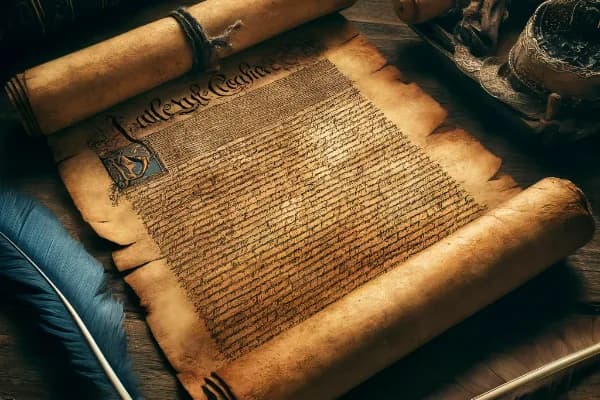
  1. Statute Law: This refers to laws passed by the UK Parliament. Statute law is one of the primary sources of the British Constitution and covers many important areas, such as civil rights, the organization of government, and the functioning of Parliament. Examples include the Magna Carta (1215), the Bill of Rights (1689), and the Parliament Acts of 1911 and 1949. These laws can be changed or repealed by subsequent acts of Parliament, making the constitution adaptable to new circumstances.
  2. Common Law: Also known as case law, common law is based on decisions made by judges in court cases. Over centuries, these rulings have established important legal principles that have become part of the constitution. Common law plays a crucial role in interpreting statutes and defining legal rights. For example, principles such as habeas corpus, which protects individuals against unlawful detention, have evolved from common law.
  3. Conventions: These are unwritten practices that have developed over time and are generally followed by those in government, even though they are not legally enforceable. Conventions guide the behavior of political leaders and institutions, such as the convention that the Prime Minister must be a member of the House of Commons and that the monarch must remain politically neutral. While conventions are not laws, they are considered fundamental to the functioning of the UK’s political system.
  4. Works of Authority: Certain legal textbooks and scholarly writings, known as works of authority, are recognized as authoritative guides on the British Constitution. These works help to explain how the constitution operates in practice. Notable examples include A.V. Dicey’s “Introduction to the Study of the Law of the Constitution” and Erskine May’s “Treatise on the Law, Privileges, Proceedings, and Usage of Parliament”. These texts provide guidance on constitutional conventions, parliamentary procedures, and the rule of law.
  5. European Union Laws and International Treaties: For several decades, European Union (EU) law was a key component of the British Constitution, as it took precedence over national law in certain areas. However, following the UK's departure from the EU (Brexit) in 2020, EU law no longer directly applies. Despite this, international treaties and agreements, such as those related to human rights or trade, continue to be important elements of the constitution. For example, the European Convention on Human Rights (ECHR), incorporated into UK law by the Human Rights Act 1998, continues to shape the UK's legal framework and citizens' rights.

Principles Underpinning the British Constitution

The British Constitution is underpinned by several core principles that guide the country's governance and legal framework:

  1. Parliamentary Sovereignty: This principle means that Parliament is the supreme legal authority in the UK. It can make or repeal any law, and no other body, including the courts, can overrule its decisions. This concept of parliamentary sovereignty is central to the British Constitution and ensures that elected representatives in Parliament are the ultimate decision-makers in the country.
  2. The Rule of Law: The rule of law ensures that all individuals and institutions, including the government, are subject to and accountable under the law. It means that laws should be applied fairly and consistently and that citizens have the right to a fair trial. The rule of law is a fundamental principle that protects citizens' rights and maintains the balance of power within the state.
  3. Constitutional Monarchy: The UK is a constitutional monarchy, meaning the country has a monarch (King or Queen) who acts as the Head of State within the framework of a constitution. The monarch’s powers are largely ceremonial, with actual political power exercised by elected representatives in Parliament and the government. The monarch's duties are carried out according to constitutional conventions, and any exercise of royal power must be done in consultation with the Prime Minister and the government.
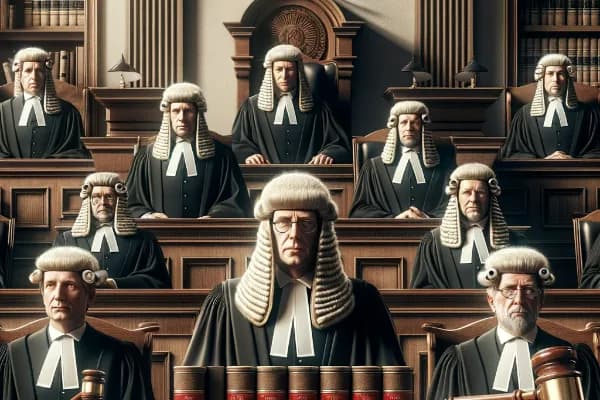
  4. Separation of Powers: The separation of powers is an essential principle of the British Constitution that ensures that the three branches of government—the executive (the government), the legislature (Parliament), and the judiciary (the courts)—are separate and operate independently. This system prevents any one branch from becoming too powerful and provides checks and balances to protect democratic governance and the rights of citizens.

The Flexibility and Adaptability of the Constitution

One of the notable features of the British Constitution is its flexibility. Unlike a rigid, codified constitution, the UK’s uncodified constitution can evolve more easily in response to changing political, social, and economic circumstances. Changes can be made through new statutes, judicial decisions, or shifts in convention. This adaptability allows the constitution to develop organically, reflecting the evolving needs and values of British society.

For instance, significant constitutional reforms have occurred in recent decades, such as the Human Rights Act 1998, the Freedom of Information Act 2000, and the devolution of powers to Scotland, Wales, and Northern Ireland. These changes illustrate the constitution's capacity to adapt and modernize while preserving the fundamental principles that underpin British democracy and governance.

13 practice questions on The British constitution

Every question below is shown with the correct answer marked. The real test mixes topics together, so once this one feels comfortable try a full practice test.

5. When is a by-election for a parliamentary seat held?

  1. Every two years
  2. Half-way through a parliamentary term
  3. When a member of Parliament (MP) dies or resigns
  4. When the Prime Minister decides to call one

Answer: C — When a member of Parliament (MP) dies or resigns

If an MP dies or resigns, there will be a fresh election, called a by-election, in his or her constituency.

6. Is the statement below TRUE or FALSE? A mayor is always elected.

  1. FALSE
  2. TRUE

Answer: A — FALSE

MPs are elected through a system called 'first past the post'. In each constituency, the candidate who gets the most votes is elected. The government is usually formed by the party that wins the majority of constituencies. If no party wins a majority, two parties may join together to form a coalition.

7. In 1999, what happened to hereditary peers in the House of Lords?

  1. Their numbers were greatly increased
  2. Their salaries were stopped
  3. They lost their automatic right to attend the House of Lords
  4. Women were allowed to inherit their titles

Answer: C — They lost their automatic right to attend the House of Lords

Since 1999, hereditary peers have lost the automatic right to attend the House of Lords.

9. What happens when a Member of Parliament (MP) dies or resigns?

  1. A by-election is held to replace the MP
  2. A neighbouring MP looks after the constituency
  3. The post remains vacant until the next General Election
  4. Their party chooses someone to fill the post until the next General Election

Answer: A — A by-election is held to replace the MP

If an MP dies or resigns, there will be a fresh election, called a by-election, in his or her constituency.

Take today’s Daily QuizBrowse all topics