The Development of British Democracy
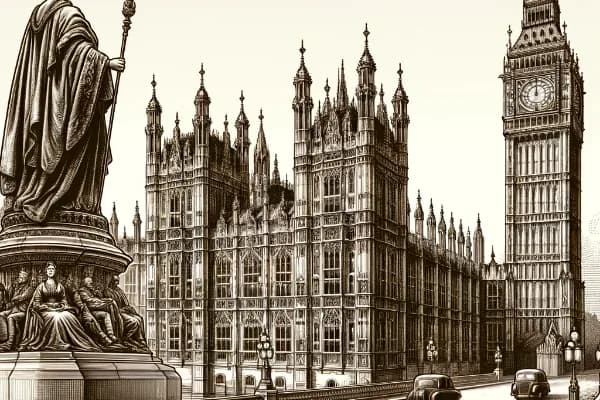
The "Development of British Democracy" section outlines the gradual transformation of the United Kingdom from a monarchy with absolute power to a modern democratic state. This evolution involved significant legal and constitutional changes over centuries, driven by conflicts, reforms, and social movements that shaped the political system in the UK as it exists today.
Early Steps Towards Democracy: Magna Carta and Parliament
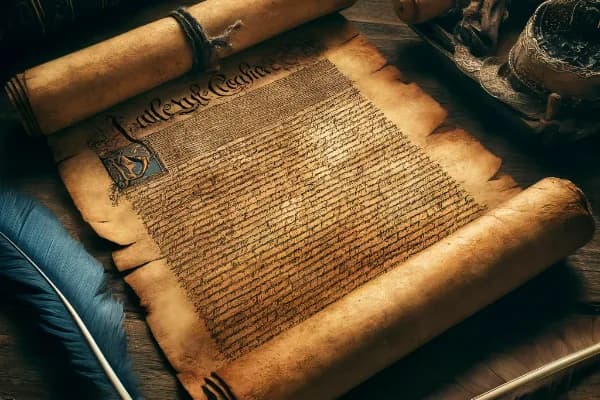
The development of British democracy began in the medieval period with the Magna Carta in 1215. Signed by King John, it established the principle that the monarchy was not above the law. It introduced the idea that the king could not levy taxes or make significant decisions without consulting his council of nobles. Although initially designed to protect the privileges of the barons, the Magna Carta laid the foundation for future democratic principles, including the rule of law and the right to a fair trial.
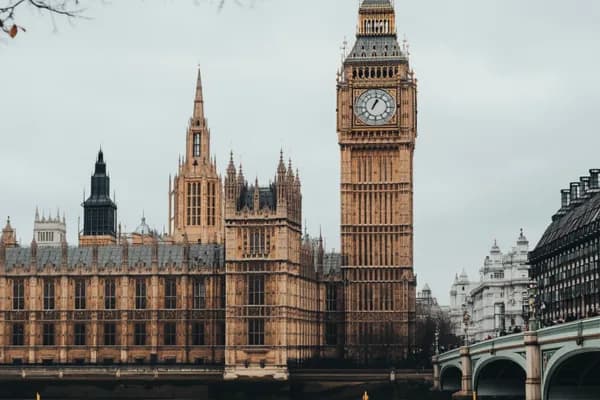
Following the Magna Carta, the development of Parliament was a critical step. Initially, Parliament was a body that advised the monarch and consisted mainly of nobles and clergy. Over time, it evolved into a more representative institution. By the 13th century, the Model Parliament of 1295, convened by Edward I, included commoners (representatives of towns and counties), setting a precedent for a bicameral system—the House of Commons and the House of Lords—which continues to this day.
The Struggle for Power: The English Civil War and the Bill of Rights
The 17th century saw a major conflict between the monarchy and Parliament. The English Civil War (1642-1651) was a result of disputes over the extent of the king's authority. The conflict led to the temporary overthrow of the monarchy, the execution of King Charles I, and the establishment of a republican government under Oliver Cromwell. Although the monarchy was restored in 1660, the power struggle continued.
The Glorious Revolution of 1688 was a turning point that resulted in the removal of King James II and the installation of William III and Mary II as joint monarchs. Following this, the Bill of Rights (1689) was passed, which limited the powers of the monarchy and affirmed Parliament's authority. It introduced important principles such as the requirement for regular parliaments, free elections, and freedom of speech within Parliament. This marked the beginning of a constitutional monarchy, where the monarch's powers were increasingly symbolic and political authority rested with Parliament.
Expanding the Electorate: The Reform Acts and Voting Rights
The 19th century was a period of significant democratic expansion in Britain, marked by a series of Reform Acts that broadened the electorate and reduced aristocratic control over the political process. The Reform Act of 1832 addressed "rotten boroughs" and extended voting rights to more middle-class men, although the majority, including all women and working-class men, were still excluded.
Subsequent reforms—the Reform Acts of 1867 and 1884—further expanded the franchise, enabling many working-class men to vote and establishing a more representative electoral system. The Ballot Act of 1872 introduced the secret ballot, reducing electoral corruption and coercion, and the Parliament Acts of 1911 and 1949 limited the House of Lords' power, ensuring that the House of Commons held the primary legislative authority.
The Campaign for Women’s Suffrage and the 20th Century Reforms
The struggle for women's suffrage became a significant movement in the late 19th and early 20th centuries. Organizations like the suffragists (who used peaceful means) and the suffragettes (who used more militant tactics) campaigned vigorously for women's right to vote. Their efforts led to the Representation of the People Act of 1918, which granted voting rights to women over 30 who met certain property qualifications, and the Equal Franchise Act of 1928, which extended the right to vote to all women over 21, achieving electoral equality with men.
The Representation of the People Act of 1969 lowered the voting age from 21 to 18, reflecting societal changes and recognizing the political rights of younger adults. These reforms significantly expanded democratic participation and shaped a more inclusive political landscape in the UK.
Modern Developments and Devolution
The latter part of the 20th century and the early 21st century witnessed further democratic developments, including devolution of powers to Scotland, Wales, and Northern Ireland, creating separate parliaments and assemblies with legislative authority over specific areas. This devolution process aimed to bring decision-making closer to the people and address regional aspirations for greater autonomy.
The Human Rights Act 1998 incorporated the European Convention on Human Rights into UK law, allowing British citizens to challenge breaches of their rights in domestic courts and enhancing individual protections. This Act, along with other reforms, such as the Freedom of Information Act 2000, which increased government transparency, marked significant steps toward modernizing the democratic framework in the UK.